2026 Residential Solar Guide
Rooftop Solar for Residences in India (2026): Expense, Grants, Setup Manual & Top Solar Panels for Homes
Setting up a solar panel for your residence is among the wisest financial decisions Indian homeowners can make in 2026. With escalating electricity expenses, governmental financial aid, and advancements in solar technology, rooftop solar setups now offer enduring cost reductions, energy autonomy, and environmentally friendly power for over 25 years.
25+ Years
Solar Panel Lifespan
50%–90%
Electricity Savings
3–5 Years
Average Payback Period
Why Solar Panels for Homes are Gaining Traction in India
Energy prices in India continue to rise annually, prompting homeowners to seek sustainable and economical power solutions. Rooftop solar systems have gained popularity because they provide lower electricity bills, long-term savings, subsidy benefits, energy independence, and eco-friendly power generation.
Contemporary solar installations are more accessible and effective than ever, particularly with advanced technologies like Mono PERC, TOPCon, and bifacial solar panels.
Benefits of Installing Solar Panels for Homes
- Reduced electricity bills
- Government subsidy support
- Protection against tariff hikes
- Long-term financial savings
- Eco-friendly renewable energy
- Higher property resale value
- Energy independence
How Solar Panels Function for Homes
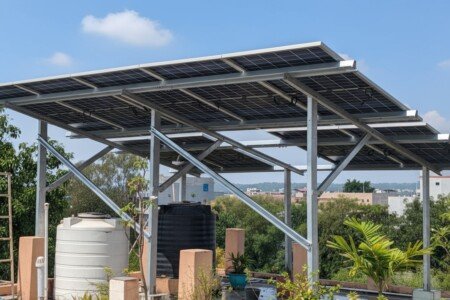
A solar panel system for a residence converts sunlight into electrical energy utilizing photovoltaic (PV) modules.
On-Grid Solar System
Connected to the public electricity grid with net-metering support. Lower cost and ideal for urban homes.
Off-Grid Solar System
Operates independently using batteries. Useful in areas with frequent power outages.
Hybrid Solar System
Combination of grid connectivity and battery backup for uninterrupted power supply.
Which Solar Panel is Optimal for Home Use?
One of the most common questions homeowners ask is:
Which solar panel is best for a home?
The answer depends on your budget, rooftop area, electricity usage, climate conditions, and efficiency requirements.
Monocrystalline (Mono PERC)
High efficiency (18–22%), compact size, longer lifespan, and better low-light performance.
TOPCon Solar Panels
Latest high-efficiency technology with better temperature handling and higher generation output.
Polycrystalline Panels
Budget-friendly option suitable for homes with larger roof areas.
Leading Solar Panel Brands for Homes in India
Tata Power Solar
Reliable residential solar solutions and strong after-sales support.
Waaree Energies
High-efficiency TOPCon and Mono PERC panels.
Loom Solar
Compact rooftop solar systems for modern homes.
Adani Solar
Premium monocrystalline solar modules.
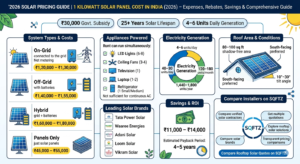
Residential Solar Panel Cost in India (2026)
The overall cost of rooftop solar depends on system capacity, panel technology, inverter quality, roof structure, and installation quality.
| System Capacity |
Average Cost |
Post-Subsidy Cost |
Recommended For |
| 1kW–2kW |
₹60,000 – ₹1.2 Lakhs |
₹40,000 – ₹80,000 |
Small Homes |
| 3kW |
₹1.5 Lakhs – ₹1.75 Lakhs |
₹1 Lakh – ₹1.35 Lakhs |
Average Homes |
| 5kW |
₹2.5 Lakhs – ₹2.8 Lakhs |
₹2 Lakhs – ₹2.4 Lakhs |
Homes with ACs |
| 10kW |
₹3.5 Lakhs – ₹6 Lakhs |
Depends on subsidy |
Villas & Large Homes |
Solar Subsidy for Homeowners in India
PM Surya Ghar Muft Bijli Yojana
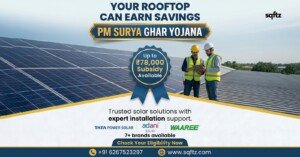
The Government of India provides subsidy support for residential rooftop solar systems under the PM Surya Ghar scheme.
- Up to 40% subsidy for systems up to 3kW
- Reduced upfront installation cost
- Direct bank transfer support
- Faster return on investment
Visit Official Portal
Step-by-Step Guide to Installing Solar Panels for Homes
- Site Assessment & Energy Review
- System Design Planning
- Quotation Comparison & Approvals
- Subsidy & Net Metering Application
- Solar Installation Process
- Testing & System Activation
- Monitoring & Maintenance
Net Metering for Home Solar Systems
Net metering enables homeowners to export excess electricity back to the grid and receive credits on their electricity bills.
- Lower electricity bills
- Improved ROI
- Credits for extra electricity generation
Compare Solar Installers on SQFTZ
Homeowners can use SQFTZ.com to compare rooftop solar solutions, verified contractors, solar brands, and transparent quotations before installation.
Benefits of Using SQFTZ
- Compare verified solar contractors
- Get transparent quotations
- Compare solar brands
- Explore rooftop solar solutions
- Compare installation pricing
- Better decision-making before booking
Visit SQFTZ
Maintenance of Solar Panels for Homes
- Wash panels every 2–3 months
- Inspect wiring yearly
- Monitor electricity generation through apps
- Service inverter every 5–10 years
Frequently Asked Questions
How many solar panels are needed for a household?
A standard Indian household consuming 10–12 units daily generally requires a 3kW system with 8–10 solar panels.
Which solar panel is best for residential use?
Mono PERC and TOPCon panels are considered among the best due to their higher efficiency and long-term performance.
Can solar panels operate air conditioners?
Yes. A properly sized 3kW–5kW rooftop system can support air conditioner usage depending on electricity consumption.
What is the lifespan of rooftop solar panels?
Most modern solar panels last 25–30 years with gradual efficiency degradation.
Compare Rooftop Solar Installers on SQFTZ
Compare verified solar contractors, quotations, brands, and rooftop solar solutions before installing a solar panel system for your home.
Explore SQFTZ