


Home Construction Cost in India
- May 27, 2026
- Uncategorized
Home Construction Guide 2026 Financing Your Dream Residence: Complete Guide to Home Construction Cost, Loans & Budget Planning in India Understand home... Read More
 by Sqftz
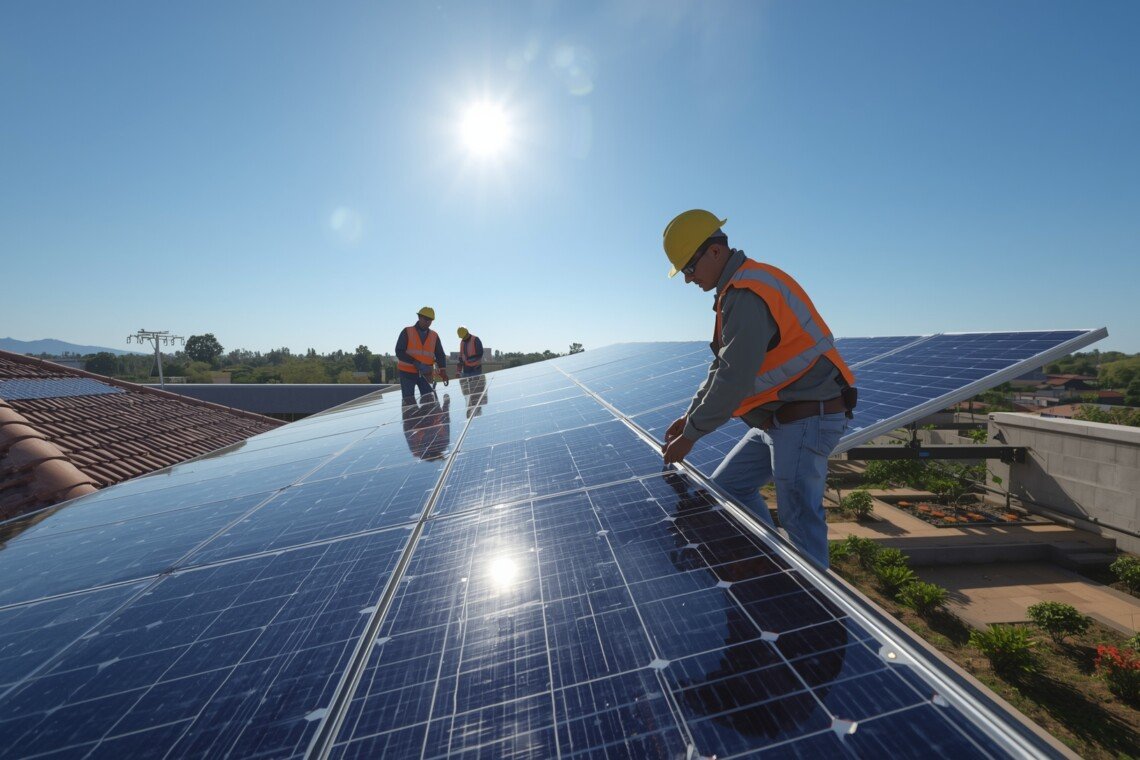

Solar power is no longer just a future concept — it’s here, affordable, and making a real difference in how people power their homes and businesses. One of the most popular entry-level setups in India is the 2kW solar system. It’s compact, efficient, and perfectly suited for small households or as a supplement to larger homes.
In this guide, we’ll cover everything you need to know — from daily electricity output and pricing to installation tips, government subsidies, and long-term benefits.
A 2kW solar system is a power-generating setup that usually includes:
Solar panels (to capture sunlight)
An inverter (to convert electricity into usable form)
Mounting structures (to fix panels on your roof or ground)
Optional battery storage (to store extra power)
It can produce around 8–10 kilowatt-hours (kWh) of electricity per day, depending on sunlight availability in your location. For perspective:
8–10 kWh is enough to run fans, lights, a fridge, a TV, and a washing machine for several hours.
In larger homes, it can still significantly reduce your grid electricity bills.
Main Components of a 2kW Solar System
The most important part of the system, solar panels are made of solar cells that absorb sunlight and convert it into direct current (DC) electricity.
Types:
Monocrystalline: More efficient, performs better in low light, but more expensive.
Polycrystalline: More affordable but slightly less efficient.
Role: Higher efficiency panels generate more power from the same space.
Since most home appliances run on alternating current (AC), the inverter converts DC from panels into AC.
String inverters: Cost-effective but less efficient if one panel is shaded.
Microinverters: Installed on each panel, improving performance in partial shading.
Power optimizers: Work with a string inverter to boost performance per panel.
Tip: Choose an inverter with at least 90–95% efficiency for best results.
Solar panels need to be installed securely — either on rooftops or ground structures.
Fixed tilt mounts: Set at a fixed angle for your location.
Adjustable tilt mounts: Allow seasonal angle changes for higher efficiency.
Tracking systems: Move with the sun, generating the most power (but higher cost).
A well-installed mounting system ensures stability during high winds and heavy rain.
Batteries store unused solar energy for nighttime or cloudy days.
Types:
Lithium-ion: Long lifespan, high efficiency, but higher price.
Lead-acid: Cheaper but needs more maintenance.
Benefit: Gives energy independence and protection during power cuts.
On average, a 2kW system can produce:
8–10 kWh per day
240–300 kWh per month
2,880–3,600 kWh per year
This depends on:
Location: Closer to the equator means more sunlight.
Panel orientation: South-facing (in India) is ideal.
Shading: Even small shadows can reduce output.
Season: Summer months produce more; winter less.
2kW Solar System Price in India (2025)
The cost varies based on:
Brand of solar panels
Type of inverter
Whether you include batteries
Installation complexity
On-Grid (No Battery)
Without subsidy: ₹90,000 – ₹1,50,000
With subsidy: ₹70,000 – ₹1,10,000
Hybrid (With Battery)
₹1,50,000 – ₹2,00,000
Batteries add cost but give power backup.
The Government of India offers up to 30% subsidy on residential solar systems under the MNRE Rooftop Solar Programme.
Eligibility: Residential use only (no subsidy for commercial setups).
How to Apply: Through your state’s DISCOM or MNRE-approved vendors.
Impact: Can lower the price of a 2kW system by ₹20,000–₹40,000.
Site Survey: Installers check your roof’s strength, space, and sunlight exposure.
System Design: Based on your energy needs and budget.
Permit & Approval: Some areas require local authority or DISCOM approvals.
Installation: Panels, inverter, and wiring are set up.
Testing & Handover: The system is connected to your meter and ready to generate power.
On-Grid vs. Hybrid 2kW Solar Systems
Feature On-Grid Hybrid
Batteries No Yes
Backup Power No Yes
Cost Lower Higher
Best For Bill reduction only Bill reduction + backup
Return on Investment (ROI)
Savings on electricity bills
Selling excess power to the grid (net metering)
Protection from future tariff hikes
After payback, you enjoy free electricity for 15–20 years.
Maintenance of a 2kW Solar System
Solar systems are low-maintenance, but:
Clean panels every 2–3 months to remove dust.
Check inverter display for errors.
Have an annual inspection for wiring and mounts.
Environmental Benefits
Reduces greenhouse gas emissions
Lowers dependence on fossil fuels
Supports India’s renewable energy goals
A 2kW system can save up to 2–3 tonnes of CO₂ emissions per year.
✅ Small households using up to 8–10 units/day
✅ Shops and small offices wanting bill savings
✅ Rural homes with frequent power cuts (if using hybrid system)
Check panel efficiency — higher efficiency = more power in less space.
Choose the right inverter — microinverters are better for shaded roofs.
Work with certified installers — ensures proper design and safety.
Compare warranties — panels: 20–25 years; inverter: 5–10 years.
Conclusion
A 2kW solar system is one of the most cost-effective ways to start using solar energy in India. It’s compact, powerful, and pays for itself in just a few years.
With government subsidies, falling equipment costs, and rising electricity rates, there has never been a better time to switch to solar. Whether you choose an on-grid system to cut your bills or a hybrid system for backup power, you’ll be saving money and helping the planet.
.
Lucknow: Starting price for installation is approximately ₹1,80,000. After central subsidy of ₹60,000 and a UP state subsidy of ₹30,000, the net cost could drop to around ₹90,000. SolarSquare
Bhopal (Madhya Pradesh): Starting cost ~₹1,80,000; price after central subsidy around ₹1,20,000.
Price ranges depending on brand:
Vikram Solar – approx. ₹4,500
Patanjali – ₹5,250
Luminous – ₹5,700
Havells – ₹6,000
Tata Solar – ₹7,200
There is no direct data found for a 4 kW system. Pricing typically increases roughly proportionally with capacity. You can expect a baseline of ~₹3.5‑4 lakh before subsidies, based on the 2 kW prices. Exact figures require quotes from installers.
There’s no current pricing data available in the sources searched for “Topcon solar panel price India.” You may want to check manufacturer or dealer websites or request quotes from authorized vendors on sqftz..com
For a 2 kW system: starting cost ~₹1,80,000, net price ~₹90,000 after subsidies. SolarSquare
For module-level pricing (like 150 W, etc.), panels are likely priced similarly to national average ranges above, plus local labor and logistics.
Depends on type and brand:
Monocrystalline: ₹2,300 – ₹2,900
Polycrystalline: ₹2,400 – ₹3,000
No specific pricing found for 165 W panels in the available sources. Costs typically scale with wattage—expect a range slightly above 150 W panel prices. You may need to check with specific manufacturers.
Price ranges by panel type and brand:
Monocrystalline: ₹8,100 – ₹9,900
Polycrystalline: ₹6,885 – ₹8,145
Some broader ranges report monocrystalline as ₹10,000–₹16,000 and polycrystalline ₹10,000–₹15,000
Standard subsidies: ₹78,000 for systems 3 kW and above (central).
Using a 3 kW system base price of ~₹2.7–3.0 lakhs, the net cost after subsidy would be approximately ₹1.92–2.22 lakhs. Specific UP state-level additional subsidies for 3 kW were not cited, but for 2 kW, UP adds ₹30,000.
hi i am here making money you can list your service
Home Construction Guide 2026 Financing Your Dream Residence: Complete Guide to Home Construction Cost, Loans & Budget Planning in India Understand home... Read More
5kW Solar System Price in India With Subsidy (2026) Most homeowners exploring rooftop solar eventually ask one important question: “What is the... Read More

Challenges Facing Construction Companies In India Today and Tomorrow The construction industry is rapidly evolving, but so too are the challenges that... Read More

Join The Discussion