Step 5: Installation Process – Design → Mounting → Panel setup → Inverter → Net metering.
Step 6: Activation – Start generating power & export surplus via bi-directional meter.
Step 7: Maintenance – Clean every 2–4 weeks, annual inspections, warranty up to 25 years.
Introduction
As electricity bills climb and homeowners look for sustainable alternatives, solar panel installation in India has emerged as both a cost-saving and eco-friendly solution. With generous subsidies, innovative schemes, and falling equipment prices, there’s never been a better time to embrace solar rooftop systems. This deep-dive guide covers everything—from site assessment to financing, installation, and maintenance—plus the latest updates from across India.
1. India’s Solar Momentum: What’s Happening Now
Accelerating Adoption Rate
India’s rooftop solar revolution is gathering pace. Recent data shows that while it took years to go solar initially, today 100,000 additional homes switch to solar every 40–45 daysThe Economic Times. Residential installations now comprise 27% of the rooftop solar capacity—up from 16% a year earlier The Economic Times. This tremendous growth underscores the growing interest among homeowners.
Delhi: Green Energy in Action
In Delhi, over 10,000 rooftop solar connections have been energized, adding 220 MWp of green energy, which translates to Rs 160 crore in annual savings for consumers. Domestic users enjoy around Rs 35 crore in savings, with additional subsidy boosts under the PM Surya Ghar Muft Bijli Yojana and Delhi Solar Policy The Times of India.
Rajasthan: Affordable Solar Campaign
Tata Power has launched the “Ghar Ghar Solar” campaign in Jaipur, making residential solar accessible with EMIs—installations start at just Rs 7,499 for 2 kW and Rs 9,999 for 3 kW, with low monthly EMIs The Times of India.
Delhi’s Free Solar Infra Initiative
Delhi has also rolled out a RESCO model where residents get rooftop solar infrastructure installed for free—homeowners only need to offer rooftop space, with installation and maintenance handled by developers The Times of India.
Scheme Highlights
Rajasthan’s PM Surya Ghar Muft Bijli Yojana offers 150 free electricity units per month to over one crore households via rooftop/community solar The Times of India.
In Karnataka, ten villages are competing in a Model Solar Village contest—winning communities could win incentives up to ₹1 crore The Times of India.
Bottom line: Momentum and policy support are strong—so it’s a prime moment for Indian homeowners to go solar.
2. Step-by-Step Guide to Solar Panel Installation in India
Step 1: Site Assessment & Energy Needs
Roof Conditions: Ensure at least 4–6 hours of direct sunlight daily. Flat rooftops offer flexibility with mounting; pitched roofs may require tilt adjustments.
Shading Checks: Shadows from trees or buildings can reduce output by 15–30%—a professional site survey is invaluable jakson-solar.compv magazine India. Tilt-adjustable mounting can help east or north-facing rooftops pv magazine India.
Energy Analysis: Review 12 months of electricity bills. A 1 kW system roughly generates 120–140 units/month; 3 kW suits medium households; bigger homes may require 5 kW+.
Step 2: Understanding Subsidies & Documents
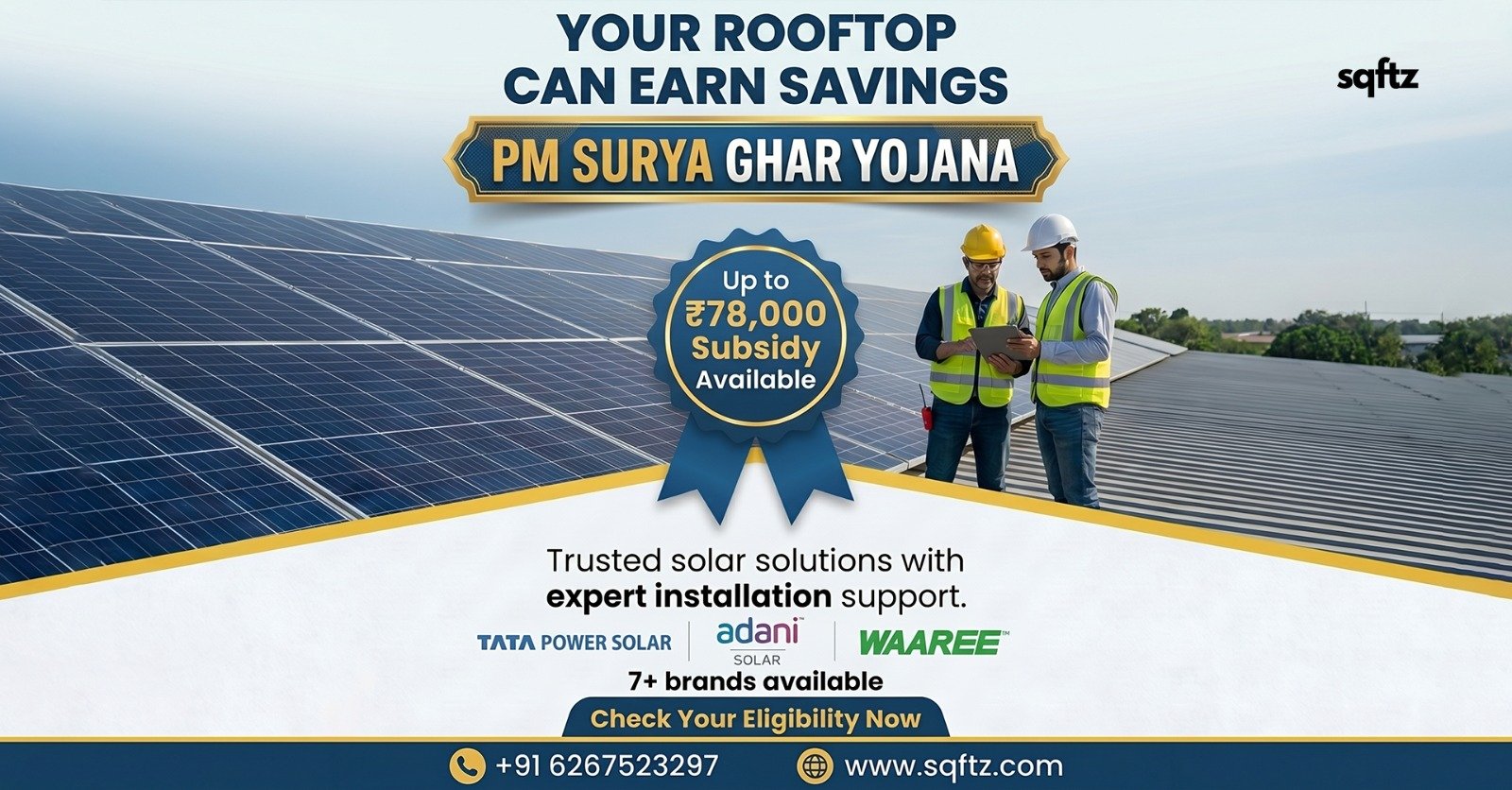
Subsidy Details: Under the Pradhan Mantri Surya Ghar Muft Bijli Yojana, homeowners get up to ₹78,000 (depending on system size), plus possible concessional bank loans Wikipedia. The scheme aims to empower 1 crore households with free electricity and substantial investment in solar systems Wikipedia.
Subsidies remain available until March 31, 2026 Freyr Energy.
Required Documents: Electricity bills, property proof, Aadhaar, PAN, bank details, net metering application, and approved system layout & vendor details pv magazine IndiaFreyr Energy.
Step 3: Cost Breakdown
Average cost of a 3 kW system ranges from ₹1.89 lakh to ₹2.15 lakh. With subsidy, effective cost drops significantly Amplus Solar.
In cities like Bhopal or Nagpur, for example, a 3 kW system may cost ₹2.1 lakh before subsidy, down to ₹1.32 lakh after subsidy SolarSquare.
Step 4: Choosing Vendor & Design
Choose MNRE-approved vendors to ensure quality and subsidy eligibility.
Seek a design with site-specific tools (e.g., shadow analysis, tilt optimization) pv magazine IndiaTata Power.
A transparent vendor will guide approvals, subsidy claims, and net metering.
Step 5: Installation & District Approvals
System Design & Approvals—including DISCOM paperwork.
Panel & Inverter Setup—DC to AC conversion via inverter.
Net Metering Connection—bidirectional meter tracks import/export.
Installation typically completes within 3–5 days once approvals are in place.
Step 6: Activation & Energy Return
After commission, system starts generating—net metering ensures your surplus is fed back to the grid for credit.
In Delhi, households recover system cost in 3–4 years and a 10 kW system can deliver savings of ₹86,400/year, plus subsidies up to ₹1.08 lakh The Times of India.
Step 7: Maintenance Tips for Long-term Efficiency
Cleaning: Wash panels with water every 2–4 weeks; more often in dusty areas.
Annual Checks: Inspect wiring, inverter performance; monitor energy output.
Avoid Common Mistakes: Missing site assessment can cut output by 15–30% and delay ROI by years jakson-solar.com.
Emerging Tech: Some are exploring AI and drone-based diagnostics to spot module degradation early arXiv.
3. Real-World Benefits and Policies
Uttarakhand Solar Push: The state offers 20–50% subsidies for projects (20–200 kW), with digital application process and special 5% support for women, SC/ST, and PWD beneficiaries; goal: achieve 2,500 MW by 2027The Times of India.
Village-Level Solar Model: In Amethi (UP), thanks to Adani Foundation’s CSR initiative, residents install 1 kW systems at just ₹5,000 (instead of ₹65,000), generating ~135 units/month The Times of India.
These cases show solar is not just for big cities—it benefits rural and residential communities alike.
Conclusion
Adopting solar panel installation in India is both practical and rewarding for homeowners—as a means to cut electricity bills, gain energy independence, and contribute to a cleaner future. With powerful incentives like the PM Surya Ghar Muft Bijli Yojana, state-level push (e.g. Delhi, Uttarakhand, Amethi), and private initiatives like RESCO models and Tata Power’s campaign, solar rooftops are becoming more accessible than ever.
To recap your journey:
Assess your roof and energy needs.
Understand and apply for subsidies.
Review real installation costs with/without subsidy.
Choose certified vendors and secure approvals.
Install and connect your system.
Monitor performance and maintain regularly.
Avoid costly installation mistakes.
Track your payback and enjoy clean savings.
What are the Steps For Installing SolarPanel for Home?
Step-by-Step Solar Panel Installation Guide Step 1: Site Assessment – Check sunlight hours, roof type, shading. Step 2: System Sizing – 1 kW = 120–140 units/month; 3 kW suits medium homes. Step 3: Financing & Subsidy – Subsidies up to 40% + bank loans available. Step 4: Vendor Selection – Choose MNRE-approved installers for subsidy eligibility. Step 5: Installation Process – Design → Mounting → Panel setup → Inverter → Net metering. Step 6: Activation – Start generating power & export surplus via bi-directional meter. Step 7: Maintenance – Clean every 2–4 weeks, annual inspections, warranty up to 25 years.
Is solar really affordable now for average homeowners?
Yes. With subsidies (up to ₹78,000) and options like RESCO (free install + maintenance), Delhi homeowners recover costs in 3–4 years, and systems pay for themselves while saving significantly on bills
Will my north/east-facing roof work?
Often, yes. Vendors can use tilt-adjustable mounting to maximize exposure, so orientation isn’t a deal-breaker
What documents are necessary to claim subsidy/net metering?
Prepare: electricity bills, property proof, Aadhaar, PAN, bank details, net-metering application, and vendor-approved layout
How long before I recover my investment?
Recovery typically spans 3–8 years depending on consumption, subsidies, and system size. Example: Delhi homes — ~3–4 years
What common mistakes should I avoid?
Skipping assessment causes 15–30% performance loss and delays ROI by years. Always opt for professional site surveys and vendor guidance
Are there newer technologies improving maintenance?
Yes—emerging solutions like unsupervised sensing with 3D AR can spot module hotspots or dirt with drones, boosting maintenance precision and efficiency
Compare solar installation cost through SQFTZ. Explore solar quotations, verified solar installers, solar panel brands, and rooftop solar installation options from one platform. If you’re searching for the solar installation cost, comparing available options is an important step. SQFTZ provides a platform where users can compare solar quotations, explore solar panel brands, connect with verified…
Electricity bills are increasing every year, making homeowners look for smarter and more sustainable energy solutions. Installing a solar panel for home is one of the best long-term investments you can make. It not only helps reduce monthly electricity bills but also increases your property’s value while contributing to a greener environment. With the growing…
Compare solar installation cost through SQFTZ. Explore solar quotations, verified solar installers, solar panel brands, and rooftop solar installation options from one... Read More
Solar Panel for Home: Complete Guide to Cost, Benefits & Installation
Electricity bills are increasing every year, making homeowners look for smarter and more sustainable energy solutions. Installing a solar panel for home... Read More


 by
by 




Join The Discussion